
Last Orders
The culture of drinking in seven terrific boozy films that truly understood the appeal of a glass, a bar and a drink with friends.

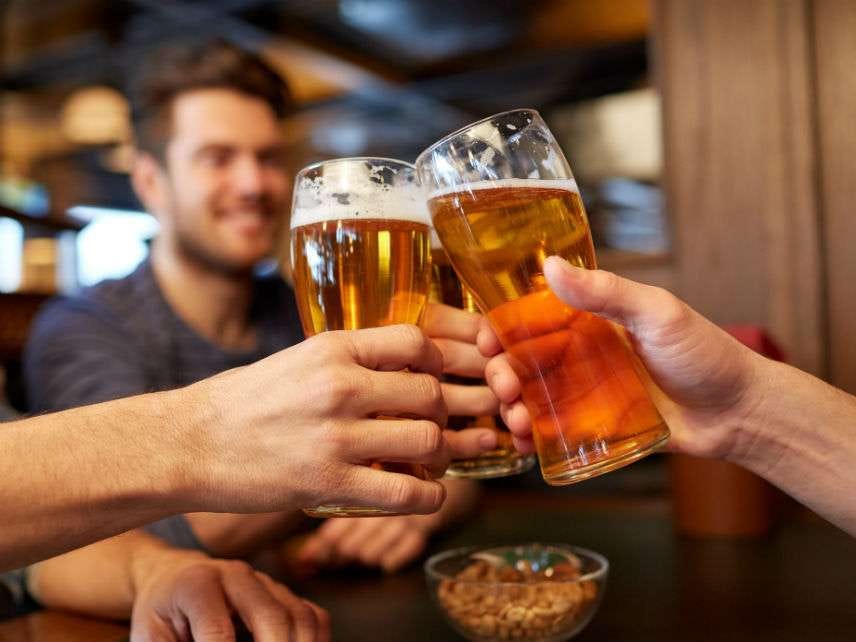
There is no prop in cinema more loaded than a drink. A glass raised can mean celebration, surrender, seduction, or slow suicide. We know what it means when a character orders a double at eleven in the morning. We know what it means when they stare at a full glass and don’t touch it.
The seven films gathered here represent something more than cautionary tales or love letters to excess. They range from the ecstatic silliness of a Scottish island whisky hoard, to the methodical self-annihilation of a man who has decided he is finished.
Withnail and I (1987)
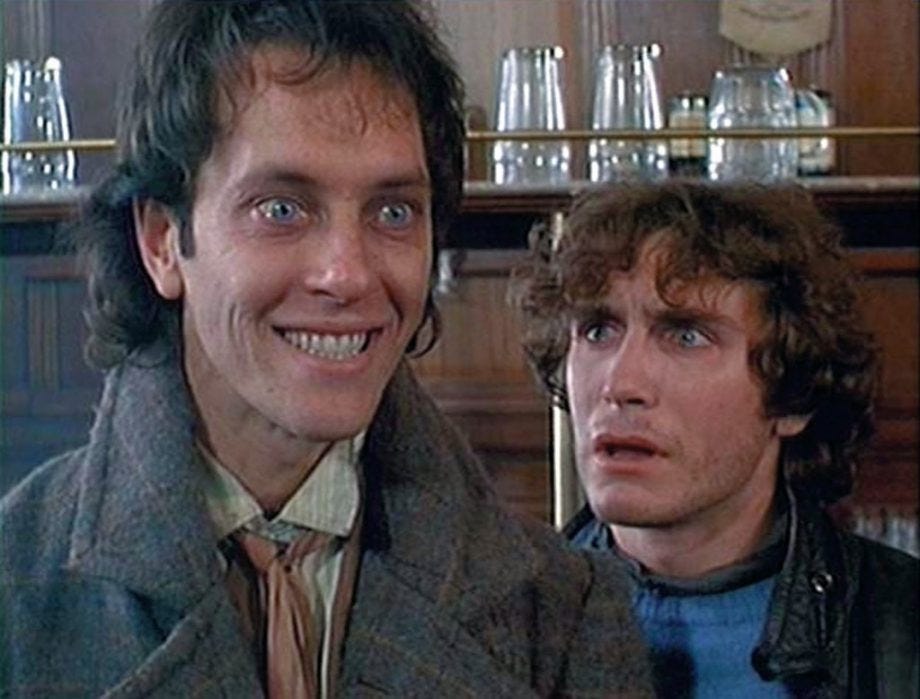
This boozy masterpiece begins in a Camden flat so squalid it seems to generate its own weather. Withnail and Marwood (unemployed actors, chronic drinkers, losers) are running out of everything: money, food, warmth, hope. The film’s genius is that it treats drinking not as a problem to be solved but as a philosophy to be argued.
“We want the finest wines available to humanity. And we want them here, and we want them now.”
Richard E. Grant’s Withnail is one of cinema’s great drunk performances, made more remarkable by the fact that Grant himself doesn’t drink. He drinks like someone who believes that he is a great artist temporarily inconvenienced by poverty, that the world owes him the finest wines available to humanity. The tragedy is that Marwood gradually stops believing it. The film ends with Withnail alone in the rain, reciting Hamlet to the wolves in Regent’s Park, and the drink has become the only audience left that will listen.
Days of Wine and Roses (1962)
Blake Edwards was known for making light, fun comedies, so his decision to direct this bleak, unflinching portrait of alcoholism in Hollywood’s golden era was quite astonishing. Jack Lemmon and Lee Remick play a couple who drink their way from cocktail party charm to complete ruin, and Edwards shoots it with the same clean precision he brought to his comedies, which makes it feel all the more brutal.
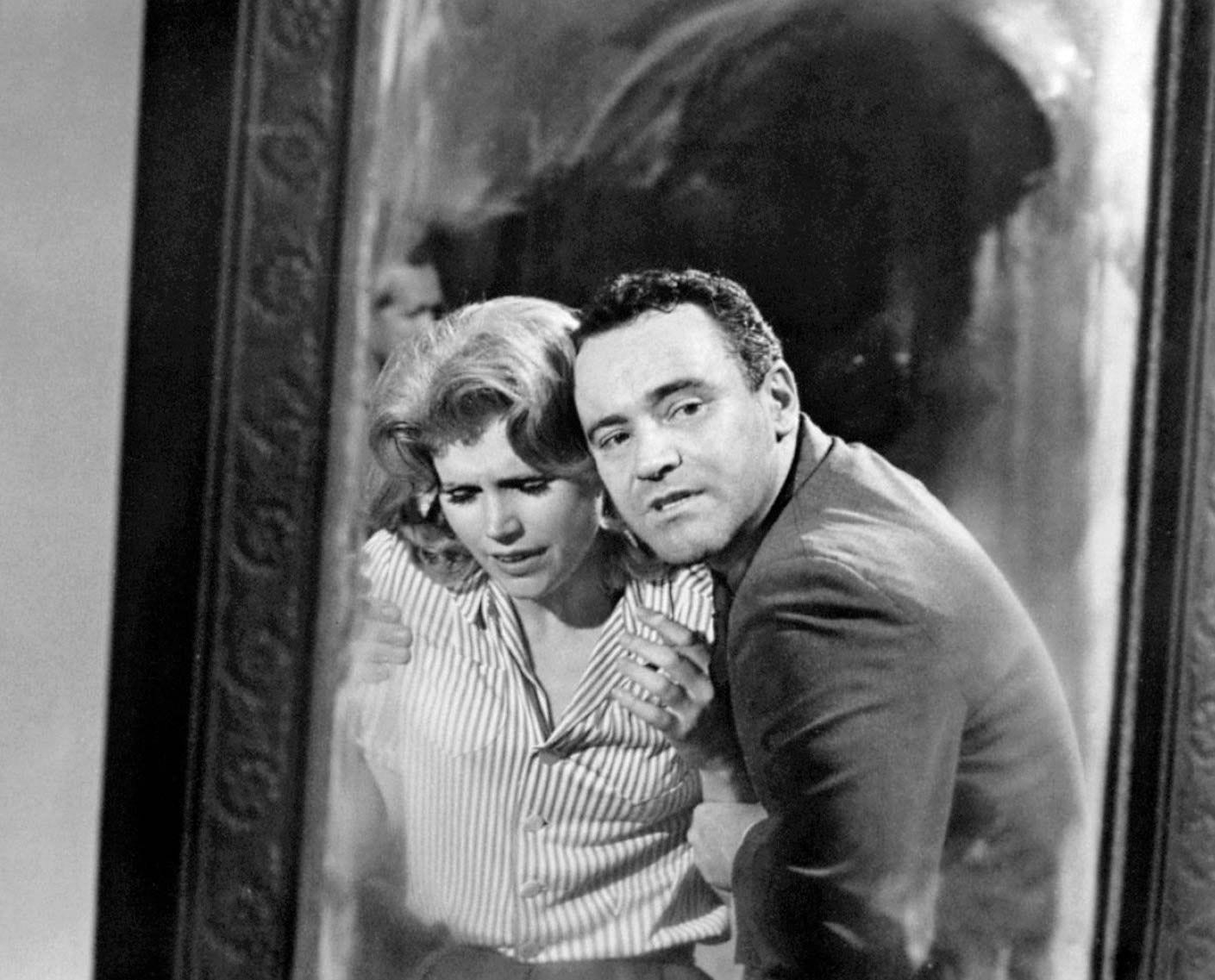
What distinguishes Days of Wine and Roses from lesser addiction films is its refusal to settle on a single villain. The drink destroys them, but so does affluent society’s easy normalization of constant drinking, so does loneliness, so does the way each enables the other’s worst tendencies when they should be saving each other.
Lee Remick’s performance has never received the credit it deserves. She begins the film as a woman who barely drinks at all, drawn into it almost accidentally through love and social pressure. Her descent is slower than Lemmon’s, which makes it harder to watch. By the film’s end she has gone further than he has and, unlike him, cannot or will not come back.
The Lost Weekend - 1945
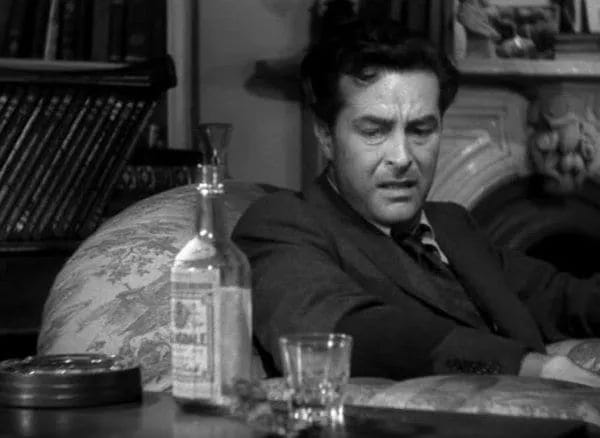
Billy Wilder’s The Lost Weekend was a film that marched into a Hollywood that routinely glamourised drinking and showed honestly exactly what whisky actually does to a man over four days.
Ray Milland won the Oscar, and deserved it, but the real achievement is Wilder’s direction. The famous sequence in which Don Birnam walks uptown searching for a pawnbroker with every shop closed for Yom Kippur, the whisky bottle swinging in his coat is shot like a nightmare. The city is indifferent. The bottle is the only constant.
The film was radical in 1945 because it refused the usual Hollywood framing that alcoholism is a character flaw, a weakness, something that decent people overcome through willpower and the love of a good woman.
Wilder shows it as a disease with its own logic, its own momentum.
Whisky Galore! (1949)
After three films of devastation in our list, some light-hearted relief. Alexander Mackendrick’s Ealing masterpiece is among the most purely joyful films ever made about drink, which is to say it is among the most purely joyful films ever made about community, ingenuity, and the human refusal to accept official misery.
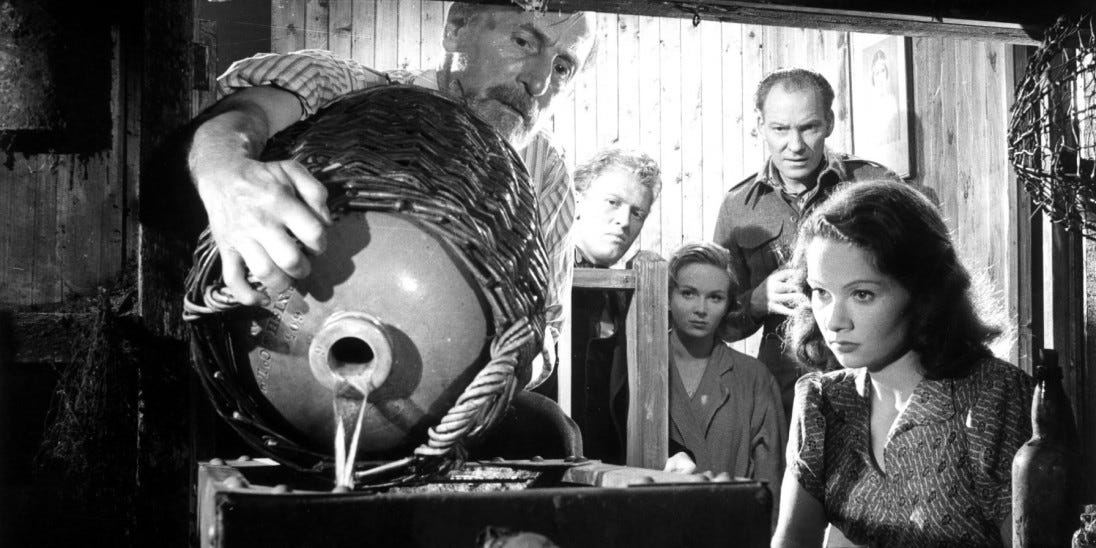
The small Hebridean island of Todday has run dry of whisky due to wartime rationing. The island is dying — socially, spiritually, economically. Then the cargo ship SS Cabinet Minister runs aground offshore, carrying fifty thousand cases of Scotch whisky. What follows is a masterclass in collective action, as the entire island conspires to salvage the cargo before the English customs officer can intervene.
In a cinema full of films where drink means destruction, Whisky Galore! stands as the exuberant, necessary counterargument: sometimes a drink is just magnificent, and the people who make it and share it are magnificent too.
Sideways (2004)
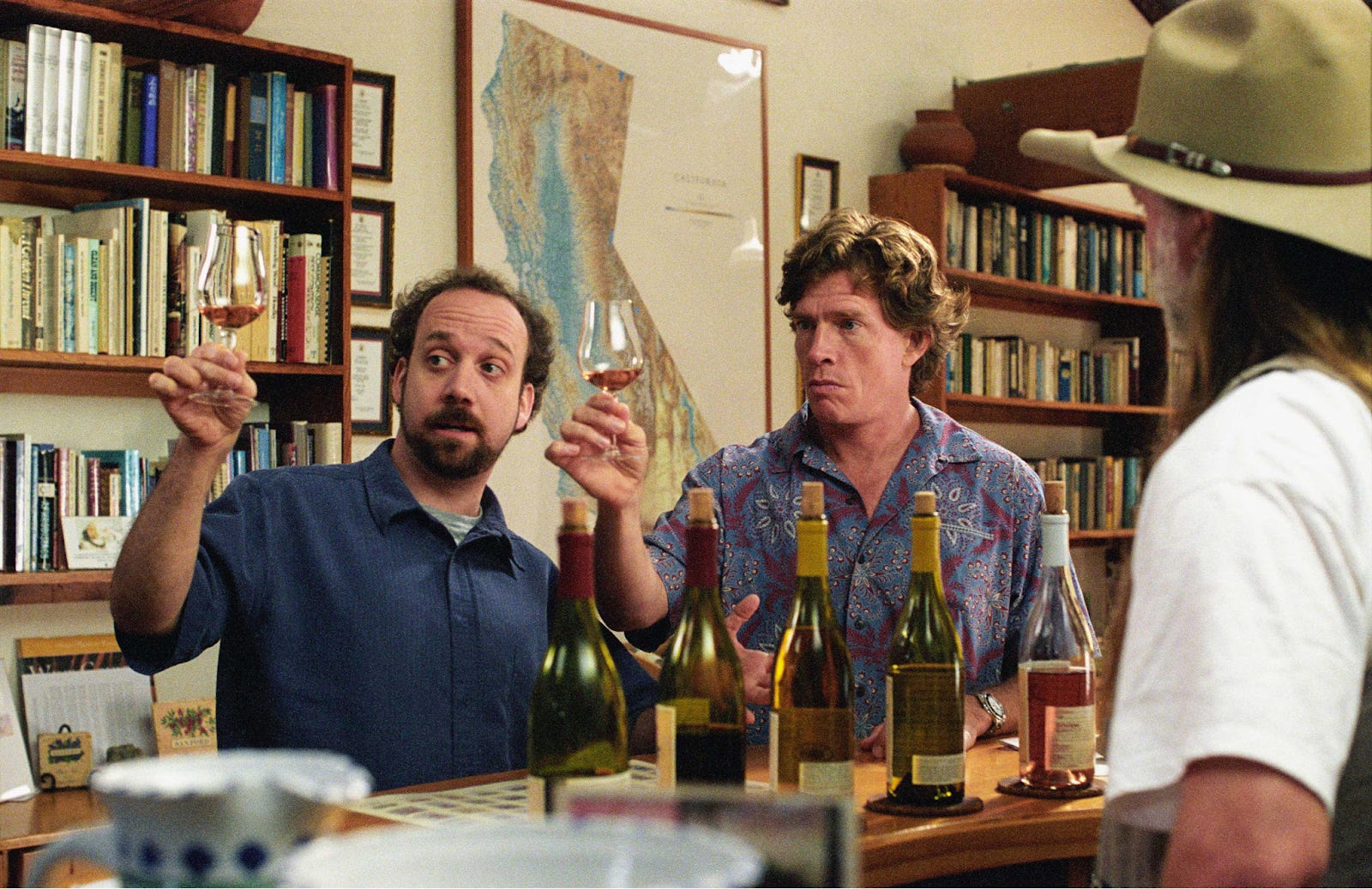
Alexander Payne’s wine-country comedy is the sharpest film ever made about the relationship between connoisseurship and self-delusion. Miles Raymond knows more about wine than almost anyone he meets. He can taste a glass and identify vineyards, vintage, even the weather conditions. He is also, as the film gently and then not-so-gently demonstrates, completely unable to understand himself.
The film’s central joke is that Miles uses his wine expertise as a surrogate for the self-knowledge he lacks. His obsessive knowledge on wine mirrors his lack of social grace and awareness.
“I am not drinking any fucking Merlot.”
But Sideways is also seriously interested in what wine actually offers. The scenes in the wineries are filmed with real respect. Paul Giamatti’s Miles is ridiculous and sympathetic in equal measure, and what Payne achieves is something rare: a film that loves wine, understands wine snobbery, and gently demolishes it, all simultaneously.
Trees Lounge (1996)
Steve Buscemi wrote, directed, and stars in this quiet, devastating film about a man for whom the local bar has become both home and coffin. Tommy Basilio hasn’t hit rock bottom in any dramatic sense, instead he hss settled into a kind of ambient ruin, drifting between the Trees Lounge bar stool, odd jobs, and bad decisions, with the unhurried certainty of someone who has stopped expecting anything different.
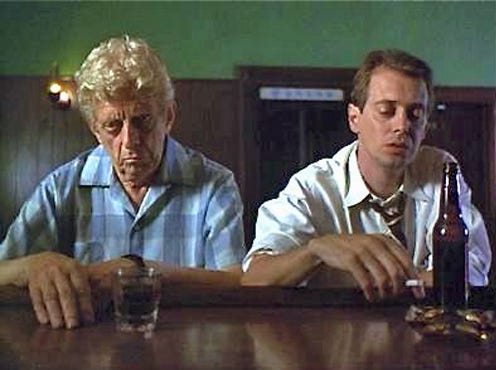
There are no intervention scenes, no moments of howling self-realisation, no rock-bottom catharsis. Tommy drinks because he drinks, and the people around him drink because they do too, and life in the Long Island bar continues its gentle, relentless erosion of everyone in it.
The film belongs to a tradition of American working-class realism that has largely disappeared from cinema, a tradition that takes seriously the lives of people who are not going anywhere and does not frame their stasis as tragedy or comedy but simply as life, fully lived within its limits.
Some people just drink, and nothing particularly dramatic happens, and the years pass, and the bar stays open.
Leaving Las Vegas (1995)
Mike Figgis’s film is the terminus of this journey. The point at which drink becomes the entire point, not the backdrop or the metaphor or the social lubricant, but the explicit, chosen instrument of self-erasure. Nicolas Cage’s Ben Sanderson has lost his job, his family, his reasons. He cashes his last cheque, drives to Las Vegas, and sets about drinking himself to death with businesslike efficiency.
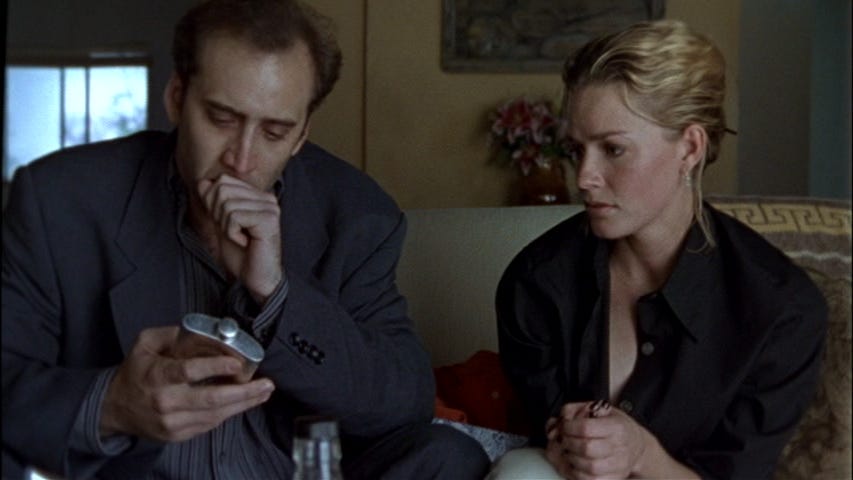
What distinguishes Leaving Las Vegas from exploitation is the respect with which Figgis treats Ben’s choice. The film never quite endorses it, but it refuses to argue with it either.
Nicolas Cage’s Oscar win is sometimes treated as a curiosity or a Hollywood anomaly. It should be treated as recognition of one of the great screen performances.
Some films earn their darkness. This one earns everything.
Bonus Watch
Gladiator (2000)
Wait, I hear you saying, I don’t remember a lot of boozing during the savage Gladiator battles? But I’ve included this one for one reason only - Oliver Reed.
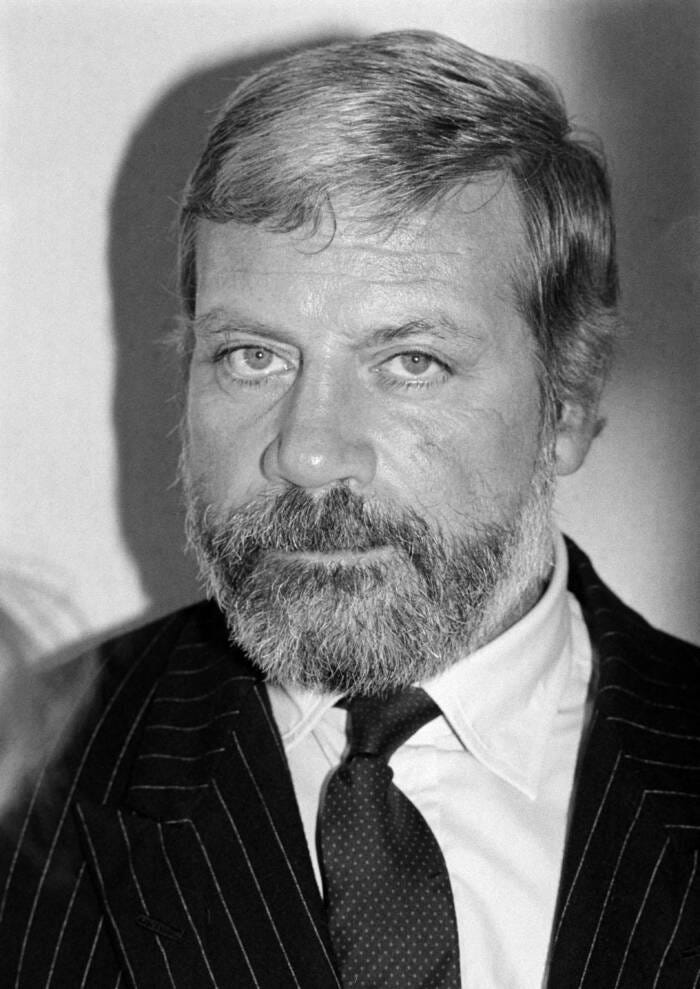
Oliver Reed lived life large, to full abandon and died from alcohol poisoning (or a heart attack, take your pick) during the filming of Gladiator.
He had promised the director, Ridley Scott, that he wouldn’t drink during the movie’s production. However, he reportedly still visited bars in Malta on the weekends during breaks between shoots.
Over the course of just a few hours, Reed reportedly drank eight pints of beer, 12 shots of rum, and half a bottle of whiskey, racking up a $435 tab during a drinking contest with a group of sailors. He then suffered a heart attack, collapsed on the floor of the pub, and was pronounced dead on the way to the hospital.
Some of his scenes in Gladiator are shot with a stand-in in heavy shadow as a result and the film’s credits are dedicated to him. A sad and precautionary tale of the dangers of hedonistic excess with alcohol.
Cinema’s relationship with drink is, in the end, the same as our own - complicated, occasionally exhilarating, sometimes destructive, and impossible to give up entirely.

The glass sits on the bar. The camera moves in. Whatever happens next, it will be true. Slainte!